Discover the Ingenious Methods Utilized in a Metal Foundry for Superior Casting Results
In today's affordable manufacturing landscape, metal foundries are increasingly taking on innovative strategies to enhance spreading outcomes - Aluminum Casting. Advanced computer simulations permit exact modeling of molten metal habits, while 3D printing allows quick production of complicated molds. In addition, environment-friendly products and automation enhance operations. These advancements assure considerable enhancements in efficiency and quality assurance. The influence of these modern technologies on sustainability and manufacturing techniques remains to be totally explored.
Advanced Computer Simulations in Metal Casting
Advanced computer simulations have revolutionized the metal casting process by enhancing accuracy and performance. These sophisticated tools enable engineers to create virtual designs of cast parts, enabling them to examine and forecast the habits of liquified metal during the casting stage. By simulating numerous parameters such as temperature level, circulation price, and air conditioning rates, manufacturers can identify possible defects before physical manufacturing starts.
This positive method lowers waste and reduces expensive errors, inevitably causing improved product high quality. Furthermore, simulations promote the optimization of mold designs, guaranteeing that they fulfill the particular needs of each project. The combination of computational fluid dynamics (CFD) and finite element analysis (FEA) more adds to the precision of these simulations, giving insights that were previously unattainable. Because of this, advanced computer simulations have ended up being an essential element of modern metal foundries, substantially advancing the sector's capacities.
3D Printing for Mold And Mildews and Patterns
3D printing has actually emerged as a groundbreaking method for developing molds and patterns in the metal foundry market. This technology enables the rapid manufacturing of intricate geometries that standard production methods have a hard time to attain. By utilizing additive manufacturing, foundries can create complex designs with decreased lead times and material waste. The capability to generate molds as needed permits greater versatility in style models, promoting faster prototyping and adjustments.
In addition, 3D printing can make use of a range of products, consisting of steels and plastics, customized to particular casting demands. This adaptability enhances the precision of mold and mildews, resulting in remarkable spreading end results with enhanced surface finishes. Additionally, the reduction in the number of components needed streamlines assembly processes, further enhancing manufacturing performance. As foundries remain to take on 3D printing, they are poised to redefine industry requirements, leading the way for advancement and boosted productivity in metal spreading operations.
Eco-Friendly Products and Processes
As the metal foundry industry faces boosting pressure to decrease its ecological footprint, the fostering of eco-friendly products and procedures has actually come to be important. Shops are currently discovering lasting alternatives to standard materials, such as making use of bio-based binders and recycled metals. These products not just reduce waste however additionally lower power consumption during manufacturing.
Furthermore, developments in sand spreading techniques have brought about the use of synthetic sands that are much less dangerous to the environment. Factories are likewise executing cutting-edge procedures like molten metal therapy that minimizes emissions and enhances the quality of actors products.
Water-based finishes have changed poisonous solvents, advertising a safer job setting. By integrating these environment-friendly techniques, metal foundries can considerably reduce their eco-friendly effect while keeping top quality spreading outcomes. This change not only profits the environment but also straightens with the expanding customer demand for sustainable production options
Automation and Robotics in Foundry Operations
While the metal foundry sector embraces technology, the assimilation of automation and robotics is transforming operations significantly. Automated systems streamline processes such as mold production, metal putting, and casting completing, considerably boosting performance. Robotics assist in the handling of heavy materials, decreasing the risk of office injuries and guaranteeing more secure atmospheres.
Even more, making use of automated guided cars (AGVs) enhances product transport within facilities, making certain timely distribution of elements to ideal workstations. By applying these modern technologies, foundries can adjust to changing needs with better agility, eventually leading to improved success and competitiveness out my response there. As automation and robotics continue to evolve, they hold the prospective to redefine standard foundry practices and drive further improvements in casting techniques.
Real-Time Tracking and Quality Control Techniques
The improvements in automation and robotics have led the way for a lot more innovative strategies to quality control in metal foundries. Real-time monitoring systems use sophisticated sensors and information analytics to track essential criteria throughout the casting procedure. These systems continually analyze variables such as temperature level, product, and pressure composition, enabling instant detection of variances from developed standards.
Quality control techniques now include artificial intelligence formulas that analyze historical information to predict possible flaws prior to they occur. This positive strategy decreases waste and enhances overall production efficiency. Additionally, incorporated comments loops permit fast modifications, making certain that each spreading satisfies rigid high quality demands.
The application of digital doubles-- virtual replicas of physical properties-- has actually also revolutionized top quality guarantee, allowing designers to replicate and enhance procedures in real-time. With each other, these ingenious strategies considerably boost the dependability and quality of castings, establishing brand-new industry standards in metal foundry procedures.
Often Asked Concerns
What Types of Metals Are Commonly Cast in Shops?
Frequently cast metals in foundries consist of light weight aluminum, iron, bronze, and brass. Each metal displays unique residential properties, making them appropriate for different applications, such as automotive parts, equipment, and imaginative sculptures, improving their flexibility in manufacturing.
How much time Does the Casting Process Commonly Take?
The casting procedure generally takes numerous hours to days, depending upon aspects such as the intricacy of the mold and mildew, sort of metal made use of, and cooling demands. Each stage influences the general period considerably.
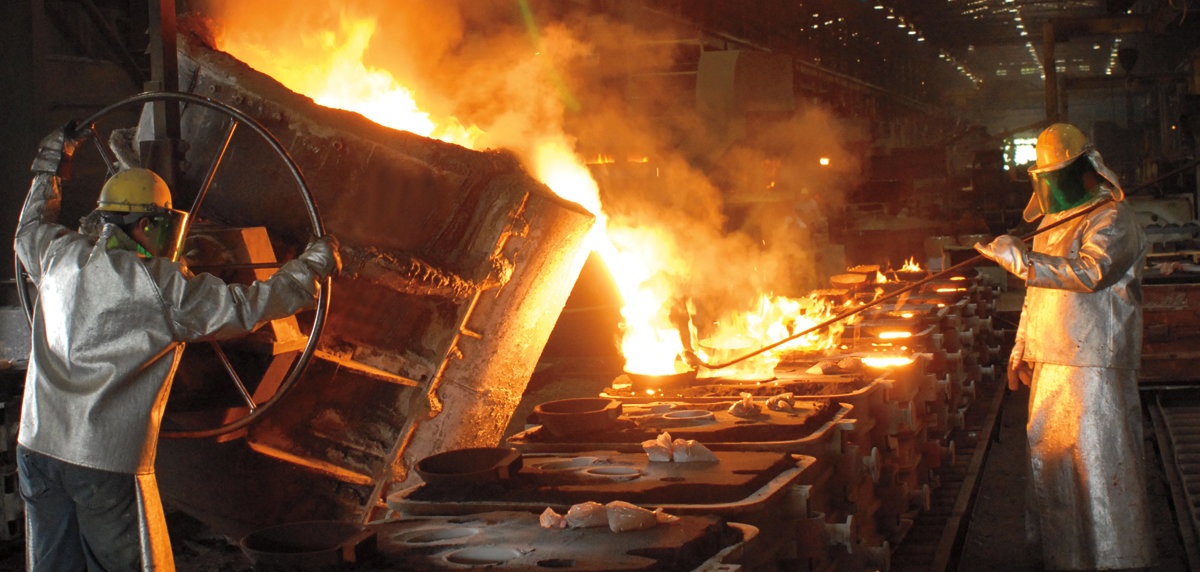
What Safety and security Measures Are in Location for Foundry Employees?
Just how Are Defects in Castings Identified and Addressed?
Problems in castings are identified with visual inspections and non-destructive testing approaches. When discovered, foundry employees resolve them by refining procedures, readjusting product compositions, and implementing rehabilitative steps to assure top quality and conformity with criteria.
What Is the Cost Variety for Metal Casting Services?
The price range for metal spreading solutions normally ranges $1 to $10 per extra pound, relying on elements such as product type, complexity go to the website of the layout, and manufacturing volume, influencing general pricing considerably.
In today's competitive production landscape, metal foundries are progressively adopting cutting-edge methods to enhance spreading results. As the metal foundry industry faces boosting pressure to lower its environmental impact, the adoption of environment-friendly materials and procedures has come to be crucial. Factories are currently discovering sustainable alternatives to conventional materials, such as making use of bio-based binders and recycled steels. By integrating these green practices, metal foundries can substantially reduce their ecological effect while preserving high-grade casting outcomes. The advancements in automation and robotics have actually paved the method for more innovative approaches to top quality assurance in metal foundries.
Comments on “The comprehensive overview to understanding how a Metal Foundry creates and manufactures high-quality metal parts”